Moving and storage near Kansas City: when does it pay off?
October 29, 2026
Storage pays off when there is a real gap between the day you must leave one home and the day you can enter the next, and that gap is too long to bridge any other way. If the gap is a few days, it usually costs less to shift a date or ask for a later closing. Storage means two moves instead of one: one trip into the unit and one trip out, plus the monthly rent in between.
When does storage make sense between two homes?
Storage earns its cost in a few common situations:
- Date gaps: your lease ends before the new home is ready for you.
- A staged move: you sell first, rent a small place for a while, then buy.
- Downsizing: you are moving into a smaller home and have not decided what to keep, sell or give away.
- Work on the new home: floors or paint make it smarter to keep furniture out until the job is done.
Check your own dates first. Write down your move-out date, the earliest day you can get keys, and any date that could still slip, such as a closing. If the gap is under a week, ask the landlord for extra days or the seller for earlier possession before you rent a unit. If the gap is a month or more, or the end date is uncertain, storage starts to make sense.
What should you read in a storage agreement?
In Missouri, self-storage falls under state law, RSMo 415.415, which gives the facility owner a lien on stored property. A lien means the owner can hold your goods for unpaid rent and, after notice, sell them. The statute also covers how you get your property back by paying what is owed. The facility’s own terms set the exact timelines, so read them closely.
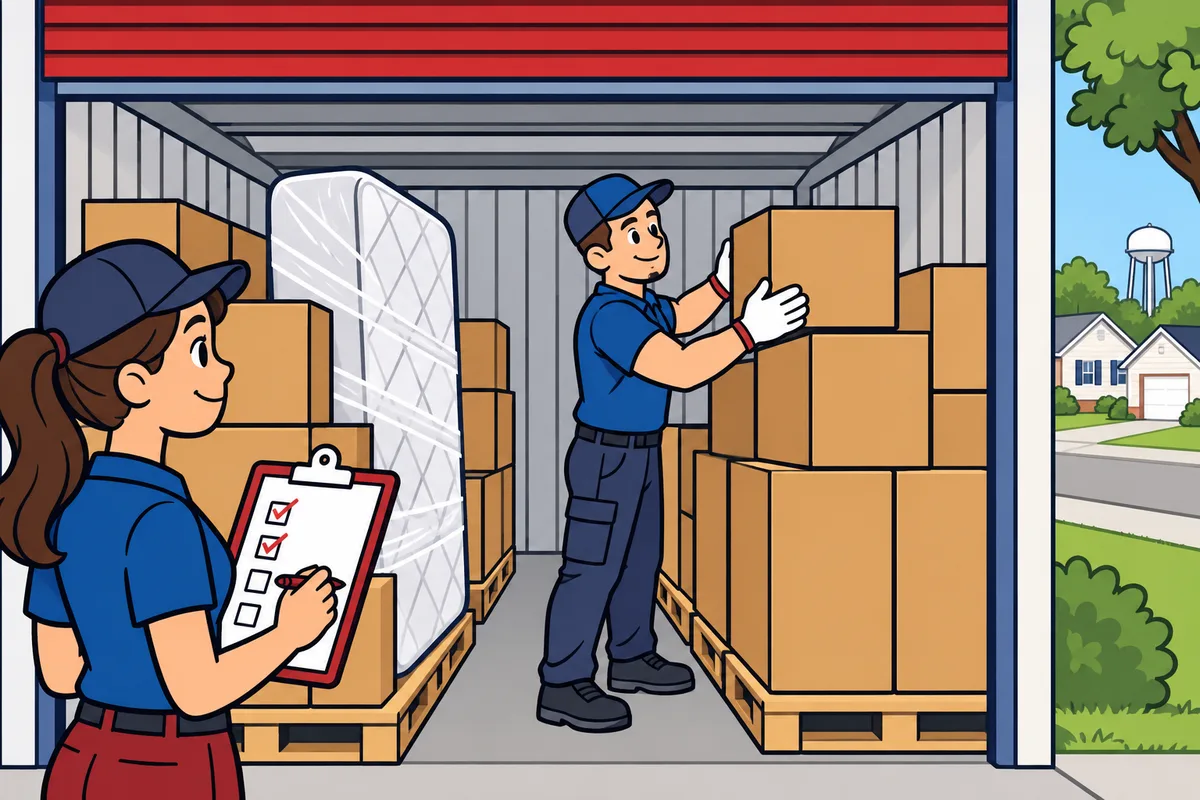
Use this checklist before you sign:
- What happens after a missed payment: late fees, lockout, and when a sale can start.
- Whether insurance is required, and whether your renters or homeowners policy covers goods kept off-site.
- Access hours, and whether a moving truck can reach your unit during those hours.
- How much notice you must give to move out.
How do you pack and label for storage?
Goods in storage sit for weeks or months, so pack for time as well as for the truck.
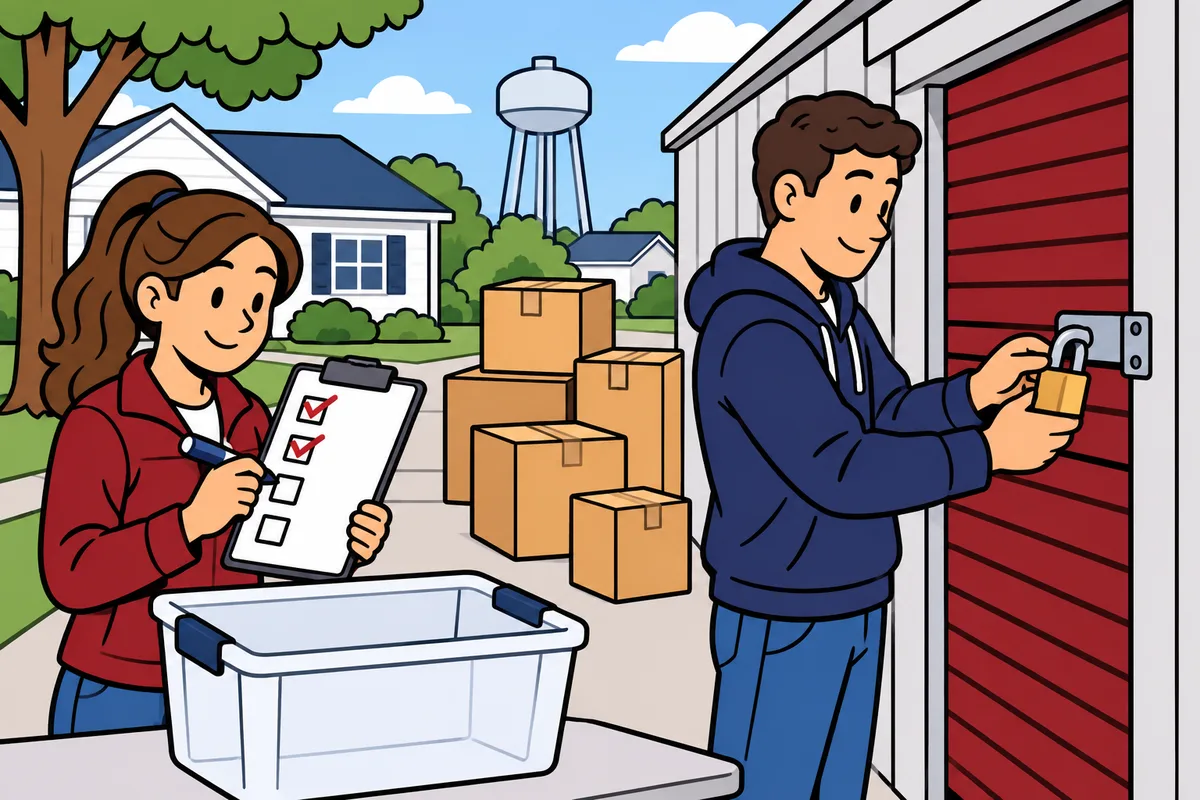
- Make an inventory before anything leaves the house. List each box by number and room, and note what is inside.
- Use sturdy boxes of the same few sizes. They stack better and are less likely to crush.
- Put heavy boxes on the bottom and light ones on top.
- Label boxes on two sides, so you can read them when they are stacked against a wall.
Can a mover and a storage unit be booked together?
A mover can carry your goods to and from a unit you rent yourself. You rent the unit from a storage facility, then book the crew for each trip. The unit and its contract are between you and the facility. Some people use a full crew and truck both ways. Others rent a truck and hire labor only for loading and unloading.
When you book, give the mover the unit’s address, its floor and the facility’s access hours. The crew needs to know whether the truck can park at the door or has to carry down a hallway.
How do you decide?
Compare two numbers. The first is the cost of storage: monthly rent for the time you need, plus a second moving trip. The second is the cost of closing the gap another way: a few extra days of rent, a short stay with family, or a later move-in date.
For a local move with F & S Moving, two movers and a truck are $115 per hour on weekdays, with a 2 hour minimum, then billed every 15 minutes. If you load a rental truck yourself, two movers for labor only start at $85 per hour on weekdays. You can move your date for free up to 2 days before the job, which helps when a closing slips. Call (816) 347-8313, Monday to Friday 8 am to 7 pm, Saturday 9 am to 5 pm or Sunday 10 am to 4 pm, and every charge goes on the written estimate before you book.
Quick answers
Is storage worth it for a gap of one or two weeks?
Often it is not, because you pay for two moves plus rent. Ask your landlord or seller about extra days first, then compare that cost with storage.
Does my homeowners or renters insurance cover a storage unit?
Some policies cover goods kept off-site and some limit it. Call your insurer and ask before you sign the storage agreement.